Sadly aDoddle.org is unable to fully support Internet Explorer 11 and below
Please can we suggest that you use one of the more up-to-date and secure browsers, all free with the latest features and vastly improved security:
- Microsoft Edge (if you are using Windows 10, this will already be pre-installed)
- Firefox
- Google Chrome
You can find out more here
Or
Close this message and continue (you may encounter errors, please feel free to let us know by emailing [email protected])

aDoddle Community Map Architecture
Why the Structure Matters
1. Purpose
This information explains the thinking behind the aDoddle community map structure and why it was designed the way it is.
It is intended to help partners, funders, policymakers and collaborators understand how the platform works and why the architecture supports community ownership, collaboration and prevention.
It also records part of the development journey of aDoddle so the philosophy behind the design is not lost as the platform evolves.
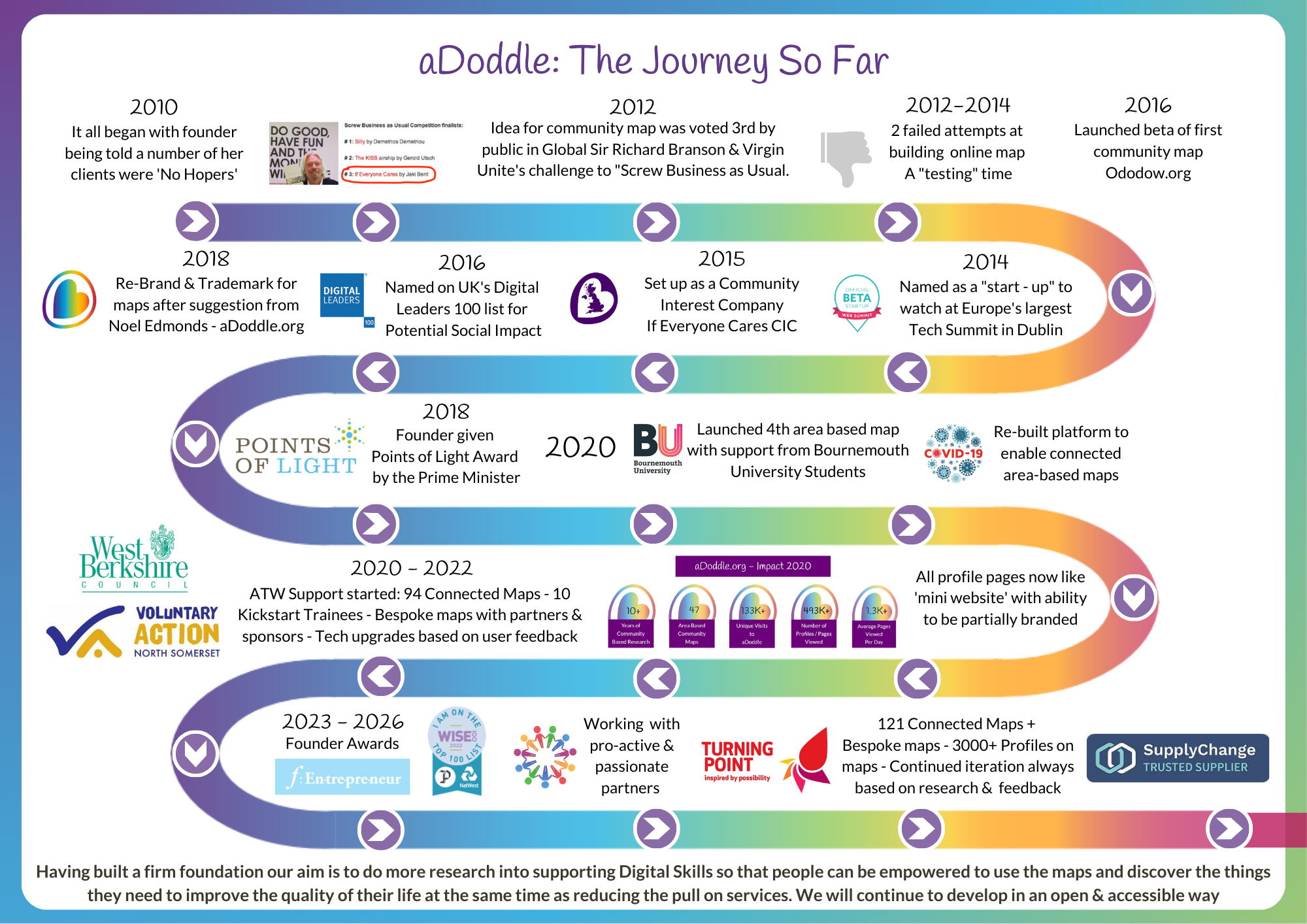
2. How the Platform Started
The first version of aDoddle began with a single UK‑wide community map.
The goal was simple:
- make it easier for people to find local help
- make it easier for community organisations to be visible
- reduce duplication between different directories
However, during the pandemic and through conversations with organisations and residents, we heard something important.
People told us they loved the idea of a shared map, but they wanted to see their place represented.
They wanted to feel that the map belonged to their town or community.
This feedback led to an important evolution in the platform.
3. The Move to Place‑Based Maps
aDoddle moved from one national map to a structure where each place could have its own map.
Examples include:
• exeter.adoddle.org
• luton.adoddle.org
• bristol.adoddle.org
Each of these maps represents a place‑based view of the same shared ecosystem.
This means:
• each community sees their own area
• organisations only maintain one profile
• information remains connected nationally
This structure allows aDoddle to support both local identity and national visibility.
4. One Ecosystem – Many Local Views
Although each area has its own map, they all sit within the same infrastructure.
This means:
• organisations only create one listing
• that listing can appear in multiple maps where relevant
• updates happen once and appear everywhere
The result is a shared community information ecosystem rather than many disconnected directories.
5. Technology Approach
The platform uses a combination of technologies designed for flexibility and resilience.
Key components include:
• bespoke Laravel development for core functionality
• WordPress Multisite for place‑based pages
This allows each community map to:
• share the same underlying infrastructure
• present its own local pages
• adapt to local needs when necessary
The goal has always been to keep the system practical, scalable and community‑friendly.
6. Supporting Local Partnerships
The architecture was deliberately designed so that trusted local partners could help manage information where appropriate.
For example, in a crisis or major local event, a partner organisation could be given limited access to update the local page connected to a community map.
This might allow them to:
• publish urgent community information
• highlight available support
• share verified local updates
The map itself would continue to display community organisations and services, while the surrounding page could act as a community noticeboard.
This model respects an important truth:
Local communities understand their needs better than any central organisation.
7. Why This Aligns With Our Philosophy
The design of aDoddle reflects a simple belief:
Communities work best when information is visible, shared and trusted.
The platform therefore aims to support:
• visibility before crisis
• collaboration instead of duplication
• local ownership alongside shared infrastructure
Technology alone does not strengthen communities.
But technology can help create the conditions where communities, organisations and local partners work together more easily.
8. Why This Structure Matters for Public Services
Many councils, health systems and community partnerships struggle with fragmented information.
Often there are multiple directories which:
• duplicate effort
• quickly become outdated
• require separate maintenance
The aDoddle model offers an alternative:
One shared ecosystem that can be viewed locally.
This helps support:
• social prescribing
• community referrals
• prevention services
• better visibility of grassroots organisations
9. The Long‑Term Vision
The long‑term goal is not simply to host a ‘directory’.
The aim is to create community infrastructure that helps people:
- find support earlier
• connect with opportunities
• discover local organisations
At the same time it helps organisations:
• be visible
• reach the people who need them
• collaborate with others in their community.
10. A Living System
aDoddle is designed to evolve with the communities it supports.
The structure allows:
• new places to be added
• partnerships to grow
• technology to improve over time
Most importantly, it keeps the focus where it belongs:
Helping people discover the support, opportunities and connections that already exist within their communities.